




Behind every video game you’ve ever played is a collection of different technologies working together in harmony to create a visual spectacle—a living, breathing world made from a chaotic soup of polygons, shaders, volumetrics, light bounces, screen-space tricks, and an avalanche of math you’ll never see but definitely feel.
It’s easy to take it all for granted. You walk through a forest in a game, and everything just works. Trees sway, sunlight cuts through the fog, birds fly past, enemies react to your footsteps, and the ground crunches beneath you. But what’s happening under the hood is nothing short of insane.
At the heart of it all is the rendering pipeline—a system that decides what gets drawn, how it gets lit, textured, and finally beamed onto your screen. Your GPU is taking raw mesh data—millions of polygons—and figuring out how to shade them, light them, and turn them into the image you see. The terrain? It might be generated from a heightmap and tessellated on the fly, adding detail only where you’re looking. That mountain in the distance isn’t even real—just a lower-res version swapped in to save memory. Once you get close, the engine quietly swaps in a high-detail mesh without you noticing.
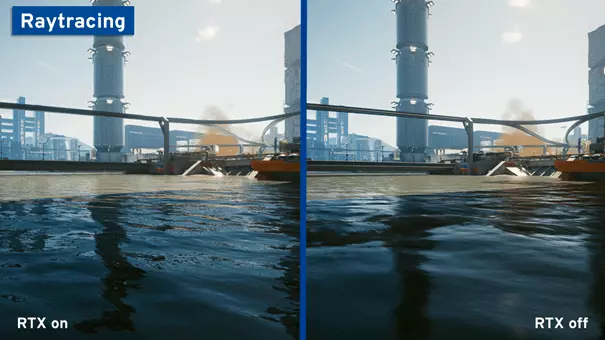
Lighting, once pre-baked and fake, is now calculated in real-time. Ray tracing mimics the behavior of light by simulating actual rays bouncing around the world, producing reflections, soft shadows, and global illumination.

Go even deeper, and you’ll hit path tracing, where multiple rays per pixel bounce around a scene, capturing all the nuances of how light behaves in reality. It’s beautiful—and brutal on performance—so we cheat. We use DLSS, FSR, and upscaling to maintain high frame rates without sacrificing detail.

Now let’s talk volumetrics. That fog rolling in from the swamp? It’s not a simple texture—it’s a ray-marched volume that simulates how light is scattered through air. Volumetric lighting grids, combined with noise functions, help create that thick, cinematic atmosphere. Add some god rays and it suddenly feels like you’re walking through a world with real atmosphere and depth.
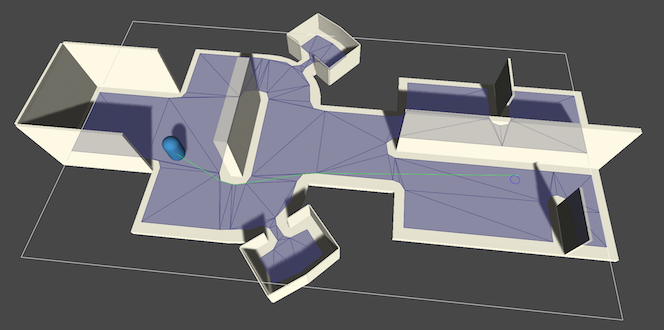
And while all of this is happening visually, the engine is also handling AI. NPCs aren’t just standing around—they’re running on behavior trees or finite state machines, deciding what to do based on player actions, visibility, and sound. Some use navigation meshes (navmeshes) to find paths through complex environments, using A* algorithms to make sure they don’t get stuck behind walls. If an enemy hears something suspicious, the engine simulates their reaction—it’s all coded logic, driven by carefully tuned rules.
https://encrypted-tbn0.gstatic.com/images?q=tbn:ANd9GcTtUNB364t9lAZHX_Jwps_3UNWw4Of4RHaggg&s
Textures are another beast entirely. Every object you see is covered in multiple texture maps: base color, roughness, metallic, normal, displacement, and more. These aren’t just pretty images—they tell the engine how to reflect light, how bumpy a surface is, or how shiny it should look. To keep this from choking your system, engines use virtual texturing and mipmaps to only load what’s visible, and only at the resolution needed.

Even your camera isn’t just a simple viewpoint. It’s a tool, often layered with post-processing effects like depth of field, chromatic aberration, motion blur, and lens distortion to simulate real cinematography. In third-person games, the camera might have collision detection to avoid clipping through walls, interpolation to smooth out movement, and smart behavior to stay behind the character even during intense gameplay.

Everything you see is made of draw calls—commands that tell the GPU what to render. Too many draw calls can tank performance, so developers use instancing to render duplicates efficiently, and batching to group similar objects together. The entire world is streamed in and out of memory in real-time, with modern engines taking full advantage of asynchronous loading and SSD speeds to load only what’s needed when it’s needed.
And all of this? Happens in milliseconds. Every frame you see—at 30, 60, 120 frames per second—is a mountain of computations, tricks, and perfectly timed code.
Video games aren’t just art. They’re technical marvels, made possible by a beautifully orchestrated mess of rendering systems, AI logic, physics solvers, audio engines, and optimization techniques. And next time you step into a digital world, just remember: behind that sunset, that enemy encounter, that cinematic explosion—is a team of systems working overtime to make you believe it’s real.